
 +91-9860432255
 MOZAMBIQUE
 INDIA
In Brief
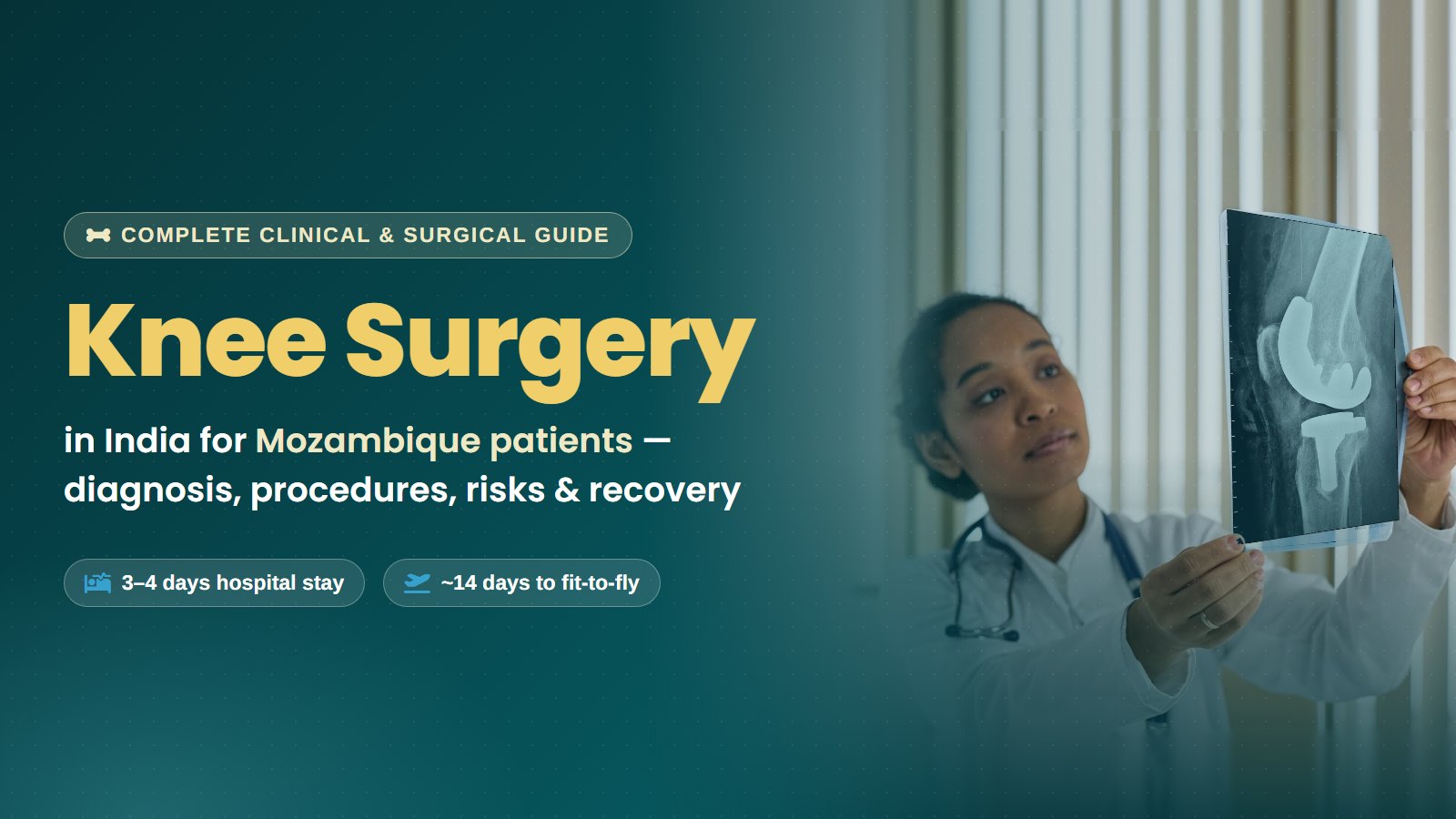
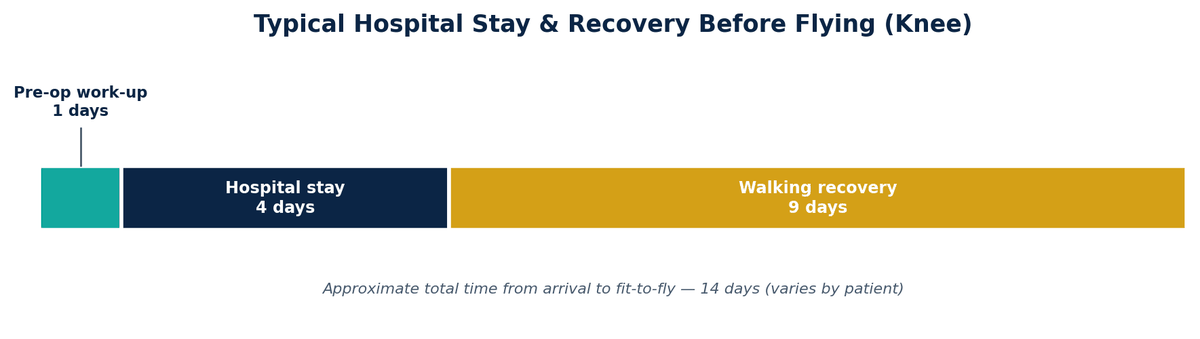
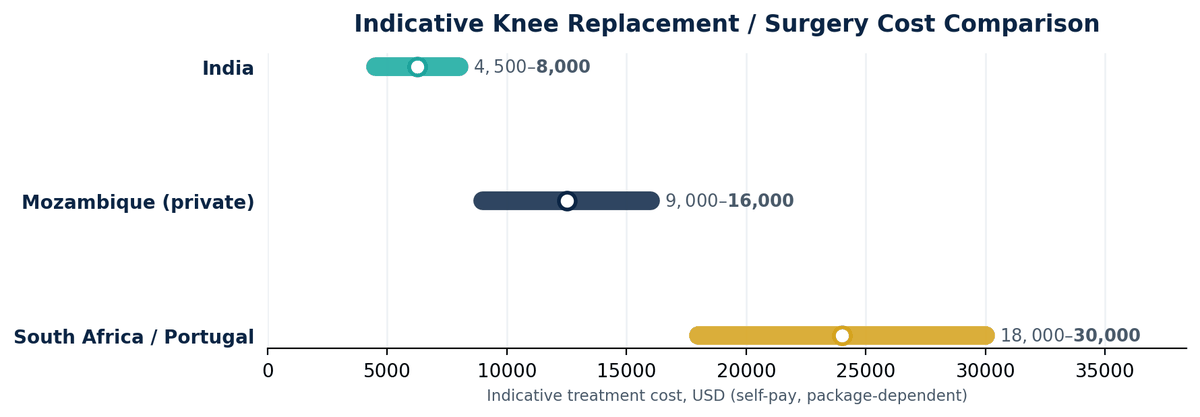
India offers Mozambique patients the full range of knee surgery — arthroscopy, ligament reconstruction, partial and total knee replacement and revision — at an indicative USD 4,500–8,000, a typical 45–65% saving versus South Africa/Portugal. X-rays and MRI can usually be reviewed before travel, hospital stay is typically 3–4 days, and most patients are fit to fly home in about two weeks. The key is the right diagnosis, the right procedure and a clear follow-up plan back in Mozambique.
For patients in Mozambique living with persistent knee pain, stiffness, instability or a sports-related injury, surgery may become an option when symptoms are severe, function is significantly limited, or appropriate non-surgical treatment has not provided sufficient relief. India offers a broad spectrum of knee procedures — from arthroscopy and ligament reconstruction to partial and total knee replacement, complex revision surgery, and robotic or navigation-assisted techniques.
- 3–4 Daystypical hospital stay after knee replacement
- 45–65%typical cost saving vs. South Africa/Portugal, package-dependent
Table of Contents(Quick Browse)
- What Is Knee Surgery?
- Common Knee Conditions
- Does Every Condition Need Surgery?
- When Surgery Is Recommended
- Warning Signs to Watch
- Tests Before Surgery
- Types of Knee Surgery in India
- Robotic & Navigation-Assisted
- Minimally Invasive Techniques
- Risks & Complications
- Recovery After Surgery
- Physiotherapy & Rehab
- Return to Work
- How Long to Stay in India
- Flying Back to Mozambique
- Documents to Take Home
- Follow-Up in Mozambique
- How Successful Is It?
- Questions to Ask Your Surgeon
- Frequently Asked Questions
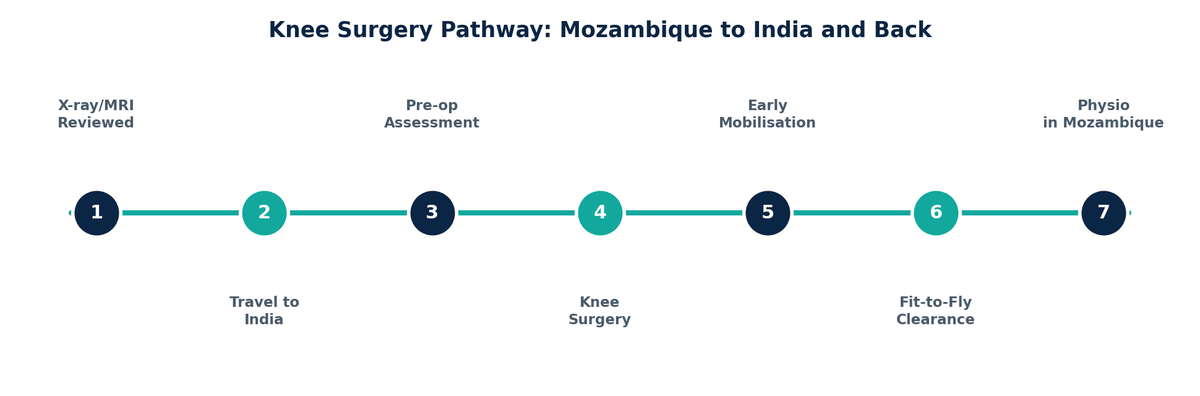
For a patient travelling from Mozambique, however, the important question is not simply “Can this surgery be performed in India?” The more useful questions are: Do I actually need surgery? Which operation is appropriate for my diagnosis? Is there a less invasive option? What are the risks? How long will recovery take? And when will I be fit enough to make the long journey back to Mozambique? This guide explains the clinical aspects of knee surgery in India from the perspective of Mozambique patients.
1.What Is Knee Surgery?
Knee surgery includes procedures performed on the bones, cartilage, ligaments, tendons and joint lining of the knee. The objective depends on the patient’s condition: relieving pain from worn-out cartilage, repairing or reconstructing a torn ligament, removing damaged meniscus tissue, correcting alignment, or replacing a joint that has been destroyed by arthritis or injury. Knee surgery is therefore not one operation — the appropriate procedure depends heavily on the exact diagnosis, the pattern of damage, and the patient’s functional goals.
2.Common Knee Conditions for Which Mozambique Patients May Consider Treatment in India
- Osteoarthritis of the Knee: Progressive wearing of the joint cartilage causes pain, stiffness and swelling, particularly with weight-bearing activity. Treatment ranges from conservative management to partial or total knee replacement depending on severity and how much of the joint is affected.
- Meniscus Tears: Damage to the cartilage cushions between the thigh and shin bones can cause pain, locking, or a sensation of the knee giving way. Some tears are treated conservatively; others require arthroscopic repair or trimming.
- Anterior Cruciate Ligament (ACL) Injury: A torn ACL, often from a sports injury, can cause instability. Younger, active patients frequently benefit from ligament reconstruction; some older or less active patients may manage without surgery.
- Other Ligament Injuries (PCL, MCL, LCL): Injuries to the other major knee ligaments range from mild sprains treated conservatively to complex multi-ligament injuries requiring reconstruction.
- Patellofemoral Pain and Instability: Problems with kneecap tracking or alignment can cause anterior knee pain or recurrent dislocation, sometimes requiring surgical realignment.
- Post-Traumatic Knee Damage: Fractures around the knee joint or cartilage damage from injury may require fixation, cartilage restoration procedures, or joint replacement depending on severity.
- Failed Previous Knee Surgery: International patients also travel for revision surgery following implant wear, loosening, infection or persistent symptoms after a previous procedure.
3.Does Every Knee Condition Need Surgery in India?
No. This is one of the most important principles for a Mozambique patient considering travelling overseas. Depending on the diagnosis, appropriate non-surgical treatment may include medication and anti-inflammatory management, physiotherapy and strengthening programmes, activity modification, weight management, bracing or supportive devices, and injections (corticosteroid, viscosupplementation, or others as clinically indicated). The presence of arthritis or a meniscus tear on an X-ray or MRI does not automatically mean surgery is necessary. A knee surgeon should evaluate whether the patient’s symptoms, physical examination and imaging findings correspond, and whether the degree of damage genuinely limits daily function.
4.When May Mozambique Patients Be Recommended Knee Surgery in India?
- Persistent disabling pain despite appropriate conservative treatment
- Significant loss of cartilage causing bone-on-bone arthritis
- Recurrent instability from ligament injury affecting daily activity or sport
- Locking or mechanical symptoms from a displaced meniscus tear
- Significant deformity affecting alignment and function
- Failure of previous knee surgery
5.Warning Signs Patients Should Not Ignore
- Sudden inability to bear weight on the knee
- Visible deformity after an injury
- Signs of joint infection: fever, warmth, redness and severe pain
- Sudden severe swelling after trauma
- Calf swelling, pain or breathlessness after knee surgery (possible blood clot)
A patient with an urgent problem such as suspected infection or a blood clot should seek immediate local emergency care in Mozambique rather than delaying to arrange overseas treatment.
6.Tests Mozambique Patients Usually Need Before Knee Surgery in India
- X-Rays: Show alignment, joint space narrowing, deformity and the extent of arthritis.
- MRI: Provides detailed information about cartilage, ligaments, menisci and soft tissues.
- CT Scan: Occasionally used for detailed bone anatomy, particularly in revision or complex trauma cases.
- Blood Tests: Routine preoperative testing may assess blood counts, kidney/liver function, coagulation and blood sugar.
- Cardiac and Anaesthesia Assessment: Additional evaluation may be required depending on age and medical history.
Can My X-Ray or MRI Be Reviewed Before I Travel from Mozambique to India?
7.Major Types of Knee Surgery Available in India
- Knee Arthroscopy: A minimally invasive, camera-guided procedure used to diagnose and treat meniscus tears, some cartilage damage, and certain ligament problems through small incisions.
- ACL/PCL Reconstruction: The torn ligament is reconstructed using a graft (from the patient’s own tissue or a donor tissue), restoring stability for appropriately selected patients.
- Partial (Unicompartmental) Knee Replacement: Only the damaged part of the knee joint is replaced, preserving healthy bone and ligaments — suitable when arthritis is limited to one compartment.
- Total Knee Replacement: The worn joint surfaces are replaced with an artificial implant, generally considered when arthritis affects the whole joint and conservative treatment has failed.
- Revision Knee Replacement: A more complex operation to replace a worn, loosened, infected or malfunctioning previous knee implant.
8.Robotic and Navigation-Assisted Knee Replacement in India
Advanced Indian orthopaedic centres may use computer navigation or robotic-assisted systems to help plan implant positioning and alignment with greater precision in suitable cases. This technology can assist surgical accuracy but does not replace the surgeon’s judgement and experience. A useful question for Mozambique patients is therefore not “Does this hospital have a knee robot?” but “Will this technology provide a meaningful benefit for my particular knee?”
9.Minimally Invasive Knee Surgery Techniques
Some knee procedures can be performed through smaller incisions with specialised instruments, potentially reducing tissue disruption, blood loss and time to early mobilisation in appropriately selected patients. “Minimally invasive” does not automatically mean “better” — the operation still needs to achieve correct alignment and fixation.
10.Risks and Possible Complications for Mozambique Patients Having Knee Surgery in India
Possible risks and complications include infection, bleeding, blood clots (deep vein thrombosis, pulmonary embolism), stiffness or limited range of motion, nerve or blood vessel injury, implant loosening or wear over time, persistent pain, leg-length or alignment issues, need for revision surgery, and anaesthesia-related complications. The risk profile of a straightforward arthroscopy is very different from that of complex revision knee replacement. Patients should request procedure-specific risk information rather than relying on generic complication percentages.
11.Recovery for Mozambique Patients After Knee Surgery in India
Early Phase
Pain control; wound monitoring; early mobilisation, often within a day of surgery; prevention of blood clots; and use of walking aids as advised.
Following Weeks
Progressive walking and weight-bearing; structured physiotherapy; wound care; gradual increase in range of motion and strength; and medication reduction where appropriate.
Longer-Term Recovery
Patients undergoing total or revision knee replacement may require several months for complete functional recovery and strength-building, even though basic walking often returns much sooner.
12.Physiotherapy and Rehabilitation After Knee Surgery
Rehabilitation usually covers range-of-motion exercises, progressive strengthening, gait (walking pattern) retraining, balance and proprioception work, return-to-sport or return-to-work conditioning where relevant, and a home exercise programme for continuation in Mozambique.
13.When Can Patients Return to Work After Knee Surgery?
This depends on both the surgery and occupation. A patient with a desk-based job following a relatively small arthroscopic procedure may return within one to two weeks, while someone performing heavy physical work after total knee replacement may need two to three months. Patients should discuss sitting tolerance, driving, kneeling, and return to full activity before leaving India.
Mozambique Patients — Ready to Take the First Step?
Share your medical reports from Mozambique with our advisory team today and get a MEDICAL CONSULTATION, an indicative cost estimate in US$, and complete support — from your flight out of Maputo to your recovery in India and follow-up back home.
Get Your Medical Consultation14.How Long Should a Mozambique Patient Remain in India After Knee Surgery?
The appropriate period varies significantly. The decision should take into account the type of surgery, wound healing, ability to walk independently with aids, pain control, risk of complications, suture/staple removal, surgeon review and length of the return journey. A Mozambique patient should not book an inflexible return flight based solely on the expected hospital discharge date.
15.Flying Back to Mozambique After Knee Surgery in India
Points to plan for include fit-to-fly timing; walking during the journey; hydration; blood-clot prevention; compression stockings if appropriate; medication timing; managing luggage and using airport wheelchair assistance if needed; and suitable seating with legroom for the operated leg. Patients at increased risk of venous thromboembolism may require individualised preventive measures.
16.What Medical Information Should You Take Back Home?
Make sure you carry your discharge summary, operative report, final diagnosis, relevant X-ray/MRI images, postoperative imaging, laboratory results, implant details (manufacturer and specifications), medication list, physiotherapy instructions, wound-care instructions, follow-up schedule, emergency warning signs, and the treating surgeon’s contact/follow-up pathway.
17.Follow-Up After Returning Home
Follow-up in Mozambique typically includes wound assessment, X-rays to check implant position and healing, physiotherapy progression, medication review, assessment of range of motion and strength, and return-to-work or return-to-sport planning.
18.How Successful Is Knee Surgery in India?
There is no meaningful single “success rate” for knee surgery. Outcomes depend on the correct diagnosis, appropriate indication for surgery, severity of disease, age, weight, bone quality, previous surgery, procedure selected, and rehabilitation effort. The expected outcome of arthroscopy for a simple meniscus tear cannot reasonably be compared with revision knee replacement. Patients should be cautious about websites offering one universal success percentage.
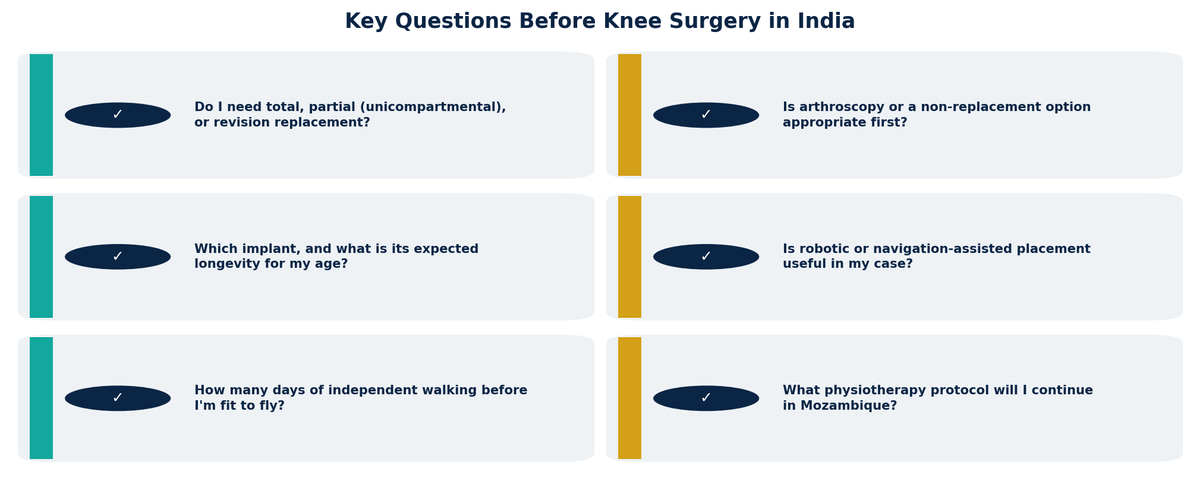
19.Questions Patients Should Ask Before Agreeing to Surgery
- What is my exact diagnosis?
- Which imaging finding explains my symptoms?
- Do I definitely need surgery, or would rehabilitation help first?
- Partial or total knee replacement — which fits my case?
- Is arthroscopy or ligament reconstruction more appropriate?
- Which implant do you recommend, and why?
- Will robotic or navigation technology provide a meaningful advantage for me?
- What are the major risks in my specific case?
- How frequently do you perform this exact procedure?
- How long will I be hospitalised, and how long in India afterward?
- When will I be fit to fly back to Mozambique?
- What follow-up will I need after returning home?
Frequently Asked Questions: Mozambique Patients & Knee Surgery in India
Can my X-ray or MRI be reviewed before I travel from Mozambique?
Often, yes. Digital images, reports and clinical information can be reviewed before travel. A definitive recommendation may still require physical examination and updated investigations.
Does knee arthritis in Mozambique patients always require replacement surgery in India?
No. Many patients improve significantly with physiotherapy, weight management, medication or injections. Replacement is usually considered when conservative treatment has failed and arthritis is advanced.
Is partial knee replacement in India better than total replacement?
Not universally. It preserves more of the patient’s own knee and can allow faster recovery when arthritis is limited to one compartment, but it is not suitable for widespread arthritis.
Is robotic knee surgery available in India for Mozambique patients?
Selected centres use robotic and navigation-assisted technology. Its relevance depends on the specific case and implant choice.
How soon can I fly back to Mozambique?
There is no universal timeframe. Your surgeon should clear you for long-distance travel based on wound healing, mobility and complication risk.
Can I continue physiotherapy in Mozambique?
Usually, yes. The Indian treating team should provide a rehabilitation protocol that can be shared with your physiotherapist in Mozambique.
What if I have already undergone knee surgery?
Revision surgery may still be possible. Send previous operative records, implant information and old and current imaging for assessment.
Should I choose a knee surgeon in India based on the technology offered?
No. Technology is one component. Procedure-specific surgeon expertise, correct diagnosis and postoperative care remain fundamental.
Key Takeaway for Mozambique Patients Choosing India
Travelling from Mozambique to India for knee surgery is a significant decision, particularly because postoperative recovery is followed by a long journey home. The most important step is establishing the correct diagnosis and determining whether surgery is genuinely required, and of what type. When surgery is appropriate, the treatment should be matched to the pathology — arthroscopy or ligament reconstruction when the joint surface is intact, partial replacement when damage is limited, total replacement when arthritis is widespread, and advanced technology when it offers a meaningful benefit. For a Mozambique patient, the treatment plan should also extend beyond the operating room to cover recovery in India, fitness for long-distance travel, rehabilitation in Mozambique, and a clear pathway for follow-up after returning home.
Citation Block: Mozambique Patients — Knee Surgery in India
Swipe to see all 10 points
| Field | Details |
|---|---|
| Article / Topic | Knee Surgery in India for Mozambique Patients |
| Primary Patient Group | Mozambique patients with persistent knee pain, stiffness, instability or a sports-related injury |
| Procedures Available in India | Knee arthroscopy, ACL/PCL reconstruction, partial (unicompartmental) and total knee replacement, revision knee replacement; robotic or navigation-assisted techniques in selected centres |
| India Cost | Approximately USD 4,500–8,000 (self-pay, package-dependent) |
| Mozambique & South Africa / Portugal Cost | Approximately USD 9,000–16,000 in Mozambique (private); USD 18,000–30,000 in South Africa/Portugal |
| Typical Saving | 45–65% vs. South Africa/Portugal, package-dependent |
| Stay in India | Typically 3–4 days in hospital; approximately 14 days from arrival to fit-to-fly — book a flexible return flight to Mozambique |
| Emergency Conditions | Suspected infection or a blood clot need immediate local emergency care in Mozambique |
| Follow-Up in Mozambique | Rehabilitation plan shared with a Mozambique physiotherapist; follow-up X-rays and a pathway back to the Indian surgeon |
| Key Decision Factor | Correct diagnosis and the right procedure for the pattern of knee damage, planned through to recovery in Mozambique |